Positive West Nile virus mosquito pools have been reported in Buda as Hays County continues seasonal surveillance across the county.
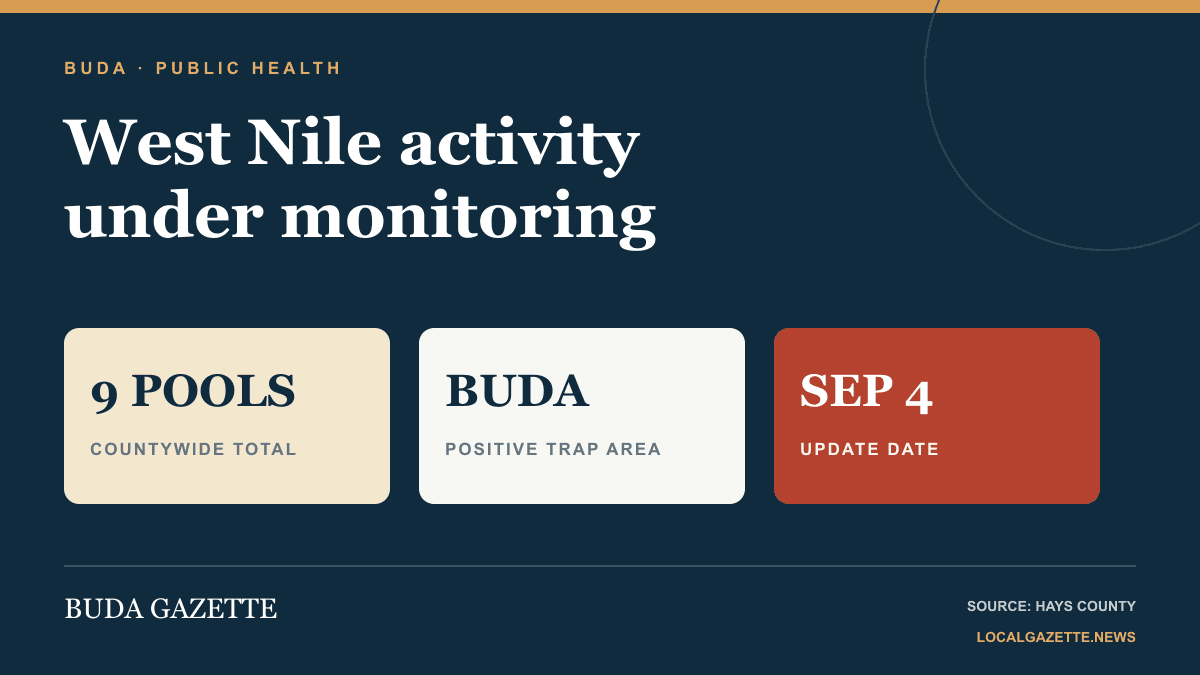
The county’s situation page said that, as of September 4, nine positive mosquito pools had been reported through its programme, with positive traps in Buda, Kyle, San Marcos and Wimberley. One laboratory-confirmed human case had also been reported in Hays County.
The county does not identify the patient or place that person in Buda. A positive mosquito trap shows that infected mosquitoes were detected at a monitored location; it does not mean every mosquito in the area carries the virus.
What West Nile virus can cause
Hays County says most infected people do not develop symptoms. Some can experience fever, headache, body aches, joint pain, vomiting, diarrhoea, rash or swollen lymph nodes.
A small proportion develop serious illness affecting the central nervous system. Older adults and people with weakened immune systems can face a higher risk of severe disease, although anyone concerned about symptoms should seek advice from a qualified healthcare provider.
This article cannot diagnose an infection. Someone with severe symptoms, rapid deterioration or an emergency should use the appropriate urgent or emergency medical service rather than waiting for an online update.
Steps residents can take
The county promotes three actions: defend, dress and drain. Defend means using an EPA-registered insect repellent and following its label. Dress means choosing long, loose and light-coloured clothing where practical. Drain means removing or treating standing water where mosquitoes can breed.
Standing water can collect in small containers, plant saucers, gutters, tyres, pet dishes and other items around homes and workplaces. Residents should check regularly, particularly after rain or irrigation.
People should not enter private land or interfere with official traps. A trap is part of a surveillance system and its result is interpreted alongside other locations and dates.
How to read future updates
Mosquito surveillance runs through the warmer season, so totals can rise as more samples are collected. A higher count can reflect both changing mosquito activity and the amount of testing.
Residents should check the date on a county update before sharing it. Conditions and totals can change, while screenshots often circulate without the current context.
Pet owners and livestock keepers should obtain species-specific advice from a veterinarian. Human prevention guidance should not be substituted for animal-health recommendations.
The official totals, county guidance and links to state and federal information are maintained on the Hays County public-health situations page.
Privacy and responsible sharing
The countywide human case does not identify a neighbourhood, workplace or school. Speculating about an individual can spread false information and invade privacy. Public-health advice should be shared without attaching an unverified name or address.
Schools, employers and event organisers can review outdoor schedules and remind people about prevention, but a positive pool does not by itself establish that an event must be cancelled. Any operational decision should reflect current advice from the responsible health authority.
Households can keep a simple weekly routine: inspect outdoor containers, refresh pet water safely, clear blocked drainage where permitted and follow repellent instructions. Consistent prevention is more useful than reacting to an undated social-media screenshot.